

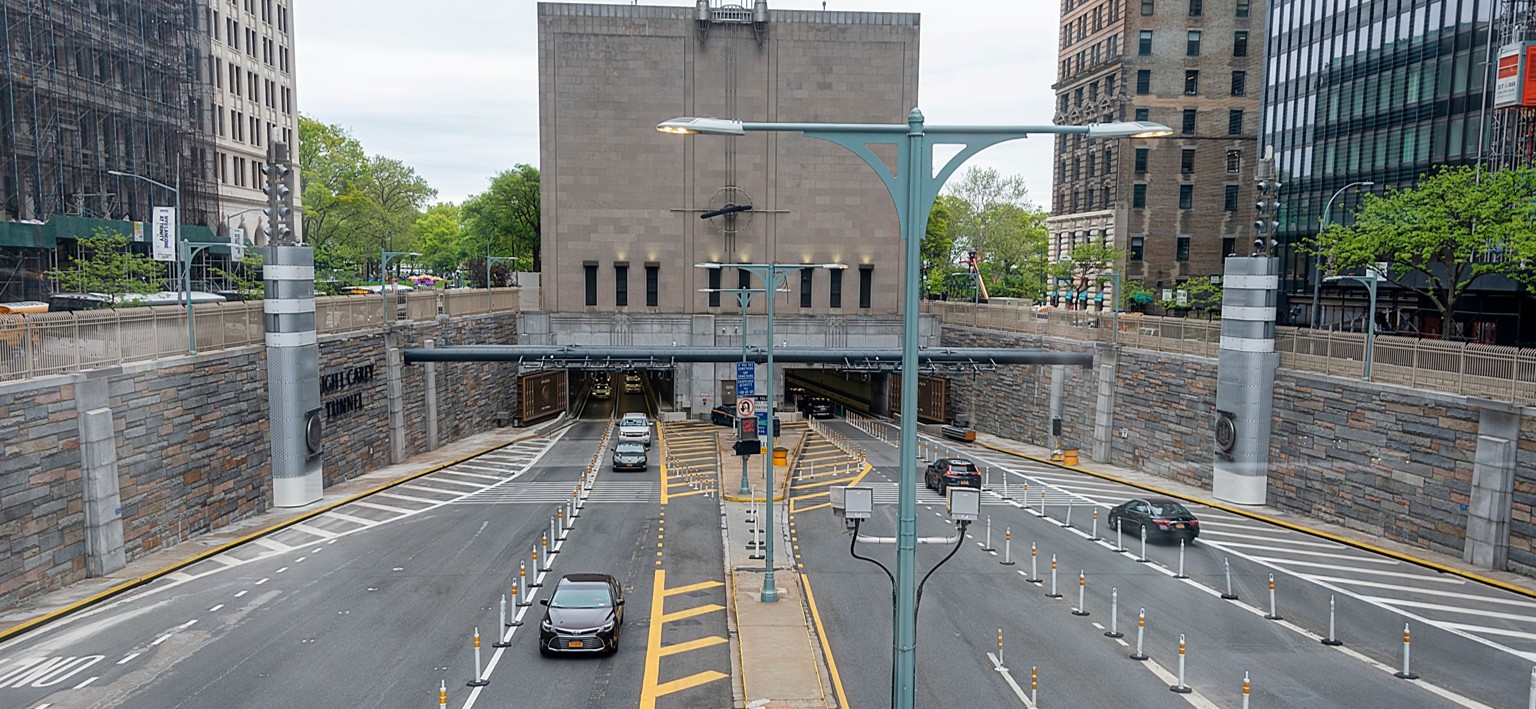
This project consisted of installing a fixed fire suppression system (FFSS) inside the Hugh L. Carey Tunnel (HLCT) and Queens Midtown Tunnel (QMT), along with structural repairs to the exhaust air ducts in both tunnels. As a subconsultant, SI Engineering, P.C. (SIE) provided construction quality compliance services.
At the HLCT, a prototype system including FFSS buildings, new water supply and electrical feeds, and the in-tunnel piping and valves between stations 18+80 and 46+50 of both the east and west tubes was installed under previous contract no. HC-07. This existing system was extended to the full length of the tunnel and fully integrated with the existing system. The scope of work at this location included evaluating the existing FFSS and determining any necessary repairs / upgrades, as well as designing, constructing, furnishing, and installing all necessary in-tunnel components to extend fully integrated FFSS coverage to the entire length of the tunnel. Miscellaneous structural rehabilitation tasks included furnishing and installing new exhaust flue frames in landside cut and cover portions of the tunnel, as design in accordance with signed and sealed drawings. Leak repairs were also required at various locations.
At the QMT, there was no existing FFSS and a completely new system had to be installed. This included constructing, furnishing, and installing the new FFSS to cover the entire length of the tunnel, as well as constructing new FFSS buildings consisting of 725+ square-foot pump room(s) and an electrical room no smaller than 800 square feet. The new system installation also involved providing new utility connections, new water supply, and new electrical supply to the new FFSS buildings, including two (2) independent water and two (2) independent electrical connections. Fire standpipe repairs were also required, which consisted of designing and constructing the replacement of the heat tracing components associated with the QMT fire standpipe. Miscellaneous structural repairs at the tunnel included furnishing and installing repairs to exhaust flue frames in landside cut and cover portions of the tunnel, as designed in accordance with signed and sealed drawings, as well as performing leak repairs at various locations.
